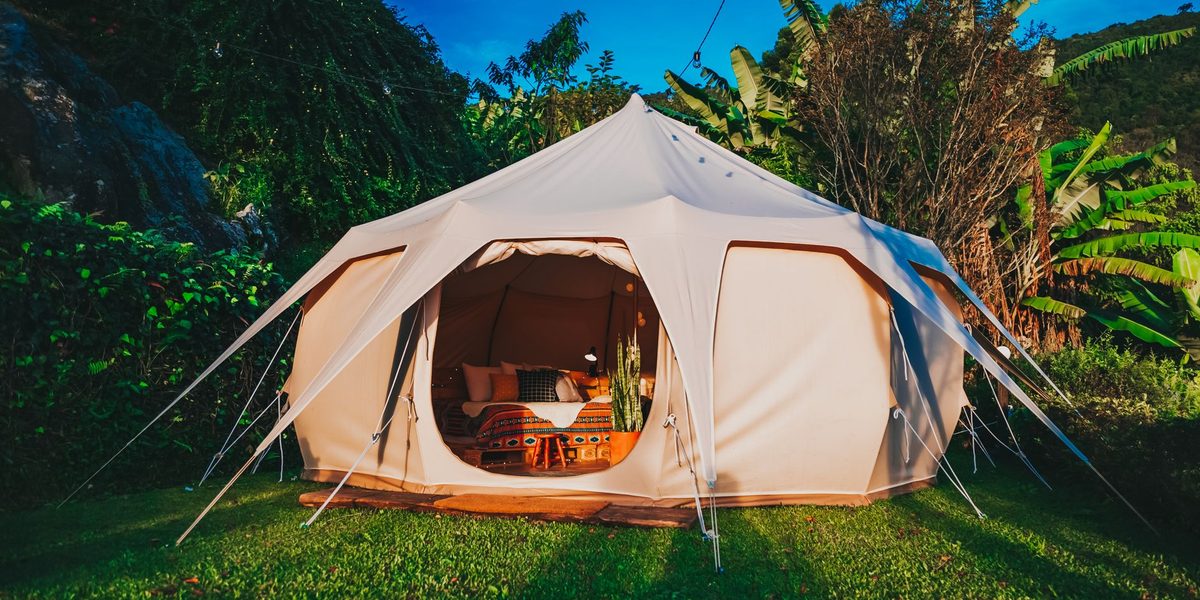
There is a strange alchemy that happens the moment a tent goes up on the lawn: the backyard your kids have seen ten thousand times becomes wilderness, bedtime becomes an adventure, and an ordinary weekend becomes the story they tell at school on Monday. A backyard campout delivers most of the magic of real camping with none of the packing lists, drive time, or three-in-the-morning regrets — and if anything goes sideways, the bathroom and the refrigerator are thirty steps away. Here is how to plan a night under the sky that your family will want to make an annual tradition.
Set Up Camp Together
Resist the urge to have the tent standing before the kids come outside. Pitching camp is the opening ceremony of the whole event, and kids should be in on it — threading poles, pounding stakes, and arguing cheerfully about which way the door should face. If you do not own a tent, borrow one, or build a canopy fort from tarps and clothesline; a night under a blanket fort strung between lawn chairs counts completely.
Let each child prepare their own bedroll: sleeping bag or blankets, pillow, one stuffed animal, and a flashlight of their own. A designated camp box — lantern, bug spray, cards, extra batteries — makes setup faster every year and becomes part of the ritual itself. Naming the campsite is mandatory; families have been known to argue for years over names like Camp Marshmallow and Fort Backyard. A hand-painted sign staked by the tent settles the matter for this year and becomes a running joke by the third summer.
Cook Dinner Like You Mean It
Camp food tastes better outside, even when the kitchen is within sight. If you have a fire pit or grill, go classic: hot dogs on sticks, foil packet dinners with potatoes and vegetables, and corn on the cob. No fire? A picnic dinner eaten on a blanket by lantern light hits the same note. The rule is simply that dinner happens at camp, not at the kitchen table.
Dessert is non-negotiable: s'mores if flames are available, or the oven-baked tray version smuggled outside if not. Let kids invent variations — different cookies, different fillings — and hold a solemn family taste test. An enamel mug of hot chocolate, even in summer, somehow completes the effect. Always follow safe fire practices, keep water close, and let kids handle roasting sticks only with supervision.
Plan the Golden Hour of Games
The stretch between dinner and full dark is prime time. Front-load it with the active games: flashlight tag, capture the flag if you have the numbers, glow-stick ring toss, or a nighttime scavenger hunt with a list written that afternoon — something that chirps, something silver in moonlight, a leaf bigger than your hand. Hide a few glow sticks around the yard at dusk and let the kids hunt them once darkness falls.
As the energy winds down, shift to tent games: card games by lantern, shadow puppets against the tent wall, and the storytelling round-robin where each person adds two sentences to an increasingly ridiculous tale. Keep a couple of quiet options in reserve, because the transition from wild to sleepy goes better with a runway.
If neighbor kids or cousins are joining, this is the window where extra campers shine. A slightly bigger crew turns flashlight tag into an epic and gives the storytelling circle more voices, and sending visiting kids home at bedtime — or tucking them into a second tent — is a decision you can make on the fly. Some families alternate: one campout each summer is family-only, and one is the neighborhood edition with popcorn for everyone.
Look Up: Stargazing and Night Listening
A backyard campout may be the first time your kids really look at the night sky. Spread a blanket away from the house lights, let everyone's eyes adjust for ten minutes, and see what you can find — the moon's craters through binoculars, the brightest planets, a constellation or two. Nobody needs to be an astronomer; wondering aloud together is the whole activity.
Try a listening minute as well: everyone silent for sixty seconds, then compare notes on what you heard. Crickets, wind, a distant dog, a passing car that everyone agrees to pretend was a bear — the ordinary yard reveals a whole soundtrack nobody noticed before. These small rituals of paying attention are the moments kids replay later, long after the games have blurred together.
Tell Stories, Not Nightmares
Campout stories are a delicate art. Aim for funny-spooky rather than actually scary — mysterious socks that vanish from dryers, a legendary backyard squirrel with a vendetta — and save true ghost stories for older kids who beg for them. Family history makes surprisingly great campfire material: the story of how the grandparents met, the most trouble a parent ever got into as a kid, the legendary vacation disaster. Kids will request these tales again and again, correcting any detail you dare to change.
End with a wind-down ritual: one thing each person loved about the day, a silly camp song, lanterns dimmed one by one. A predictable closing ceremony helps excited campers actually fall asleep, which is the campout's final boss.
Survive the Night with Grace
A few practical moves separate the triumphant campout from the two-in-the-morning retreat. Check the forecast and pick a dry, mild night. Add far more padding under sleeping bags than seems necessary, because the ground is the number one comfort complaint. Station water bottles and a spare flashlight by the tent door, apply bug spray before dark, and agree on the rule that bathroom trips are always allowed and always accompanied for little kids.
And decide in advance that going inside is not failure. If a storm rolls in or a five-year-old melts down at midnight, moving the party to the living room floor keeps the campout spirit intact. The tent will still be there tomorrow; plenty of families deliberately end with breakfast at camp even when the night finished indoors. Framing the retreat as part of the adventure — the night the storm chased us inside — keeps morale high and preserves the story.
Make the Morning Part of the Magic
Do not let the campout end with everyone shuffling inside at dawn. Camp breakfast is the victory lap: pancakes carried out on a tray, eggs on the grill, or simply cereal eaten cross-legged in the tent while reviewing the night's highlights. Someone should formally log the campout — date, campers present, weather, best moment, worst moment — in a notebook that lives in the camp box.
Then strike camp together the same way you built it. Kids fold, stuff, and carry; the tent gets dried before storage; the notebook gets one final line. That log turns a single fun night into an institution, because the first question next summer will be when the next campout entry gets written.
Final Thoughts
A backyard campout asks so little — one tent, one evening, a bag of marshmallows — and returns so much. It works for toddlers and teenagers, for one family or two invited neighbor kids, in a big yard or a tiny one, with the flexibility to bail indoors that real camping never offers. Pick a date this month, put it on the calendar where everyone can see it, and let the anticipation build. The backyard has been waiting all along to become the most memorable campsite your kids ever visit.