There’s a reason the taco bar is the undisputed hero of feeding a mixed crowd: when everyone builds their own plate, nobody argues with the chef. The build-your-own dinner bar takes that logic and runs with it. Instead of serving one finished dish and bracing for reviews, you set out components — a base, some proteins, a rainbow of toppings, a few sauces — and let each eater engineer exactly the dinner they want. Picky eaters get control, adventurous eaters get variety, and the cook gets out of the please-everyone business entirely. Here are the best bar formats to rotate through, plus the setup tricks that make them run smoothly.
Why Bars Win Over Picky Eaters
Picky eating is usually less about flavor and more about control and unfamiliarity. A plated dinner arrives as a take-it-or-leave-it proposition; a bar turns the same ingredients into a series of small, low-stakes choices. A child who would reject a composed bowl of “everything mixed together” will often happily assemble most of those same ingredients when they choose each one themselves.
Bars also lower the pressure around trying new things. When the unfamiliar topping sits in its own little bowl rather than hiding in the dish, taking a tiny spoonful feels safe. Many families find that the weird pickled thing nobody touched the first time becomes somebody’s favorite by the third bar night — exposure without a fight.
The Anatomy of Any Dinner Bar
Every successful bar follows the same simple formula, which means once you’ve run one, you can invent endless others. Build around four layers and you can’t go wrong:
- The base: the filling foundation — tortillas, potatoes, noodles, rice, or flatbread.
- The proteins: one or two options, at least one mild and familiar.
- The toppings: a mix of fresh, crunchy, creamy, and tangy — aim for five to eight small bowls.
- The sauces: two or three, ranging from crowd-pleasing to bold, always served on the side.
The ratio matters more than the recipe. One base, a couple of proteins, and a generous spread of toppings feels abundant without requiring restaurant-level effort. Most toppings are chop-and-serve, so the actual cooking usually comes down to a single pot or pan.
The Taco Bar, Perfected
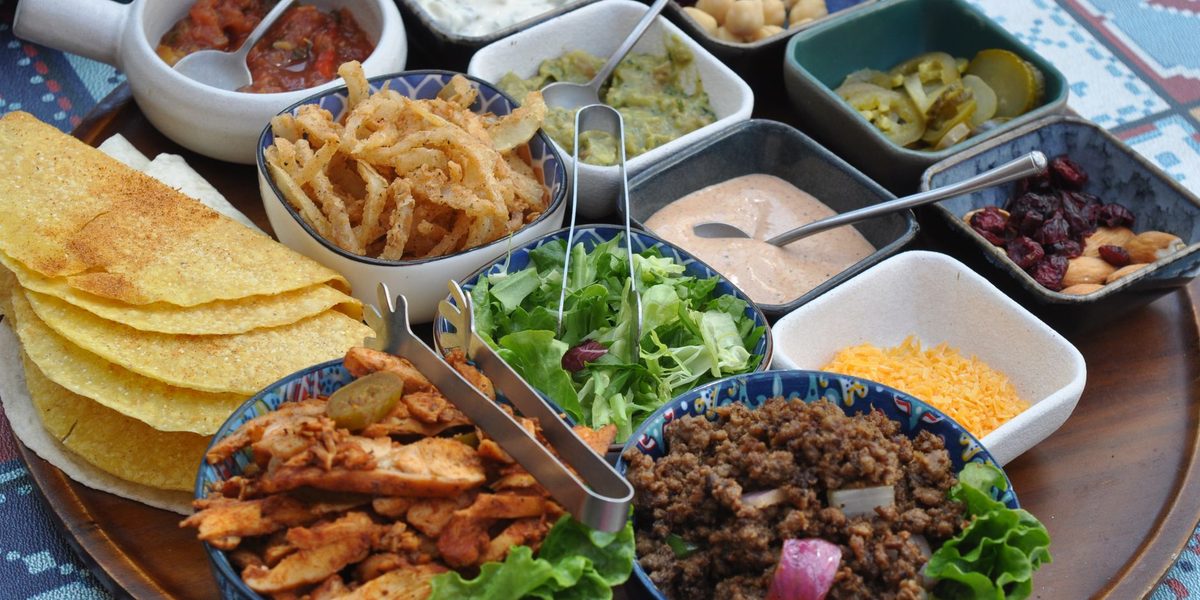
Start with the classic. Warm a stack of tortillas (wrap them in a clean towel to keep them soft), and offer one cooked filling like seasoned ground beef or shredded chicken plus a pan of spiced black beans for flexibility. Then let the topping bowls do the heavy lifting: shredded lettuce, diced tomato, grated cheese, pickled onions, sliced jalapeños, crumbled cheese, fresh cilantro, and lime wedges.
The upgrade that transforms a good taco bar is texture: something crunchy (crushed tortilla chips work), something creamy (guacamole or a simple avocado mash), and something tangy (a quick cabbage slaw with lime). Keep one mild creamy sauce and one spicy one, and even the most cautious eater at the table can build a taco they trust.
The Baked Potato Bar
Possibly the coziest bar of all, and the easiest: the oven does almost everything. Bake more potatoes than you think you need — big fluffy ones, plus a few sweet potatoes for variety — rub the skins with a little oil and salt for extra crispness, and split them open with a flourish at the table. Toppings divide into the classics (butter, sour cream, chives, shredded cheese, crispy bacon bits) and the dinner-makers that turn a potato into a meal: chili, steamed broccoli with cheese sauce, taco-seasoned meat, or barbecue-style pulled chicken.
The sweet potato contingent deserves its own mini-menu: a drizzle of maple, toasted pecans, and a pinch of cinnamon on one half; black beans, corn, and lime crema on the other. One bar, two completely different dinners.
The Ramen and Noodle Soup Bar
A soup bar sounds ambitious but is mostly assembly. Keep a big pot of well-seasoned broth at a gentle simmer, cook the noodles, and set out the rest cold or room temperature: soft-boiled egg halves, sliced scallions, corn, spinach that wilts on contact, shredded chicken, mushrooms, bean sprouts, and a lineup of finishers — chili crisp, sesame oil, soy sauce, a spoonful of miso-style paste to enrich individual bowls.
Each person layers noodles and toppings into their bowl, then ladles hot broth over the top. The broth does the cooking and unifying, which means a bowl with three toppings and a bowl with ten both turn out great. This format also stretches gracefully into a pho-inspired night with rice noodles, fresh herbs, and lime.
The Bowl Bar
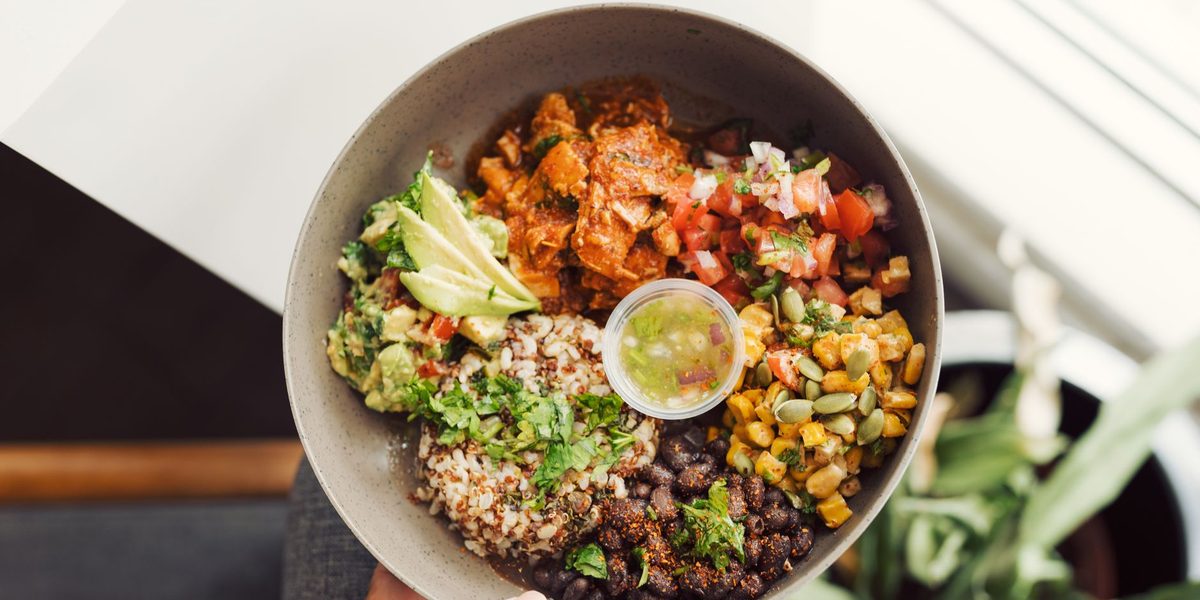
The grain bowl bar is the weeknight workhorse because it happily absorbs whatever meal prep or leftovers you have. Offer one or two bases — rice, quinoa, or greens — plus a protein, then lean hard into roasted and raw vegetables: roasted sweet potato and broccoli from one sheet pan, plus cucumber, shredded carrot, and avocado from the cutting board.
Sauce is the soul of a bowl, so make it the star of the setup: a peanut-style sauce, a lemony tahini drizzle, and a yogurt-herb option cover most cravings between them. Finish with a texture bowl — toasted seeds, crispy chickpeas, or crushed nuts. The same bar reads as a teriyaki-style bowl, a Mediterranean bowl, or a burrito bowl depending entirely on which sauce and toppings each person grabs.
The Flatbread Bar
Somewhere between sandwich night and pizza night lives the flatbread bar. Warm a stack of pitas, naan, or other flatbreads, and set out spreads as the foundation layer — hummus, garlicky yogurt, olive tapenade, or a smoky eggplant dip. Then add things to pile on top: grilled chicken or spiced meatballs, chopped cucumber-tomato salad, crumbled cheese, olives, pickled vegetables, and fresh herbs.
Eaters can go wrap-style, folding everything into a handheld dinner, or open-faced with artful layers. Because the components skew fresh and room-temperature, this is the ideal warm-weather bar — almost nothing needs the stove, and leftovers become tomorrow’s lunch without any transformation at all.
Setup Tricks That Make Bar Night Easy
A little staging keeps the line moving and the table tidy. Arrange components in assembly order — base first, protein next, toppings, then sauces at the end — so plates get built logically instead of backtracked. Use small bowls with spoons rather than big platters; portions stay sensible and double-dipping stays contained. Anything that must stay hot gets the stove or a covered pot; everything else can be prepped an hour ahead and covered.
Two more quiet rules: always include one familiar “safe” option in every layer so no one stalls out, and always make slightly less of the toppings than you fear you need — bar nights generate tiny leftovers by design, and most of them combine into a respectable lunch bowl the next day.
Final Thoughts
The build-your-own bar is less a recipe than a philosophy: cook the components, then hand over the creative control. Rotate through taco, potato, ramen, bowl, and flatbread formats and you’ve got a month of dinners where the picky eater is happy, the adventurous eater is entertained, and the cook finally gets to sit down while everyone else does the assembling. Once the formula clicks, you’ll start seeing bar potential in nearly everything you make — chili, salads, nachos, even oatmeal — and dinner arguments quietly become a thing of the past.