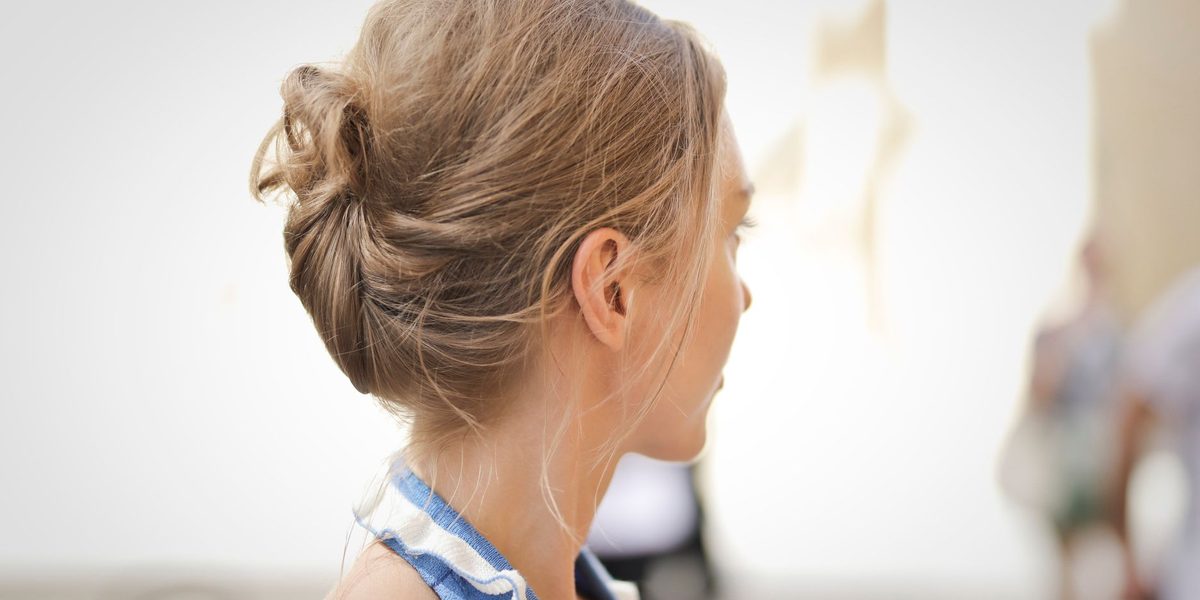
There’s a persistent myth that elegant updos belong exclusively to salon chairs and other people’s weddings. In truth, most of the polished styles you admire are built from a tiny set of moves — a twist, a tuck, a well-placed pin — repeated with confidence. Styling your own hair up is a learnable skill, and a deeply useful one: an updo elevates a plain outfit, survives weather, works on second-day hair, and makes even an ordinary Tuesday feel slightly more composed. Here’s a collection of self-styled updo ideas from five-minute everyday knots to occasion-worthy chignons, plus the prep and pinning tricks that make everything actually stay put.
Prep and Pins: The Unskippable Foundations
Updos are engineering, and engineering needs materials. Freshly washed, slippery hair is the enemy — day-old hair, or clean hair roughed up with a little texturizing spray or dry shampoo, grips itself and holds pins twice as well. Brush thoroughly first; hidden tangles turn every twist into a fight you’ll lose one pin at a time.
Then learn to pin like a stylist. Bobby pins go in wavy side down, and the strongest hold comes from anchoring: slide the pin so it catches a little hair from the style and a little from your head, pointing toward the center of the updo rather than away. Two pins crossed in an X lock each other in place. Larger U-shaped hairpins hold volume loosely for soft styles; bobby pins do the structural work. With those two facts and a dozen pins, you can build nearly everything below.
The Low Chignon: Maximum Elegance, Minimum Skill
The low chignon is the little black dress of updos. The basic build: low ponytail at the nape, twist the tail, wrap it around the elastic, and pin the coil flat. That’s the entire trick, and it already reads as polished. Loosen the sides slightly and pull out a face-framing tendril or two, and it reads as expensive.
Variations carry it anywhere: a side-parted chignon feels vintage; a deliberately loose, slightly undone version suits daytime; a sleek, gel-smoothed one with a center part turns evening-formal. If your layers escape, let a few — escaped pieces around the nape are part of the style’s charm. For fine hair, tease the ponytail gently before twisting to double the apparent volume of the coil.
Twisted and Knotted Buns for Every Day
Above the nape, the bun family offers a style for every mood. The twisted topknot — twist the whole ponytail tightly until it coils on itself, then pin — is the fastest updo in existence. The braided bun (braid the tail, then coil and pin) holds better than any other version and looks intricate for zero extra skill. The messy bun, done properly, is not an accident: loop the hair through the elastic without pulling the ends fully out, spread the loop, and pin a few pieces artfully.
Two ideas make every bun better. First, height placement changes the message — crown height is playful, mid-head is classic, nape is elegant — so choose deliberately. Second, after pinning, hold the bun with one hand and gently tug its outer edges with the other to relax it; a slightly bloomed bun looks styled, while a tight one looks utilitarian. Thirty extra seconds, entirely different result — and the loosening trick works identically on chignons, twists, and every braid you’ll ever pin up, so it’s worth making a reflex.
The French Twist and Its Modern Cousins
The French twist is the grande dame of updos and easier than its reputation. Gather hair at the nape as if starting a low ponytail, twist the whole section upward against the head, tuck the ends into the roll, and pin along the seam where the twist meets the head. The first two attempts will be lopsided; the third will click, and after that it’s a ninety-second style you’ll reach for constantly.
Modern variations soften the formality: leave the ends fanning out of the top for a deliberately undone finish; do a loose, low version that sits diagonally; or twist just the back and let front pieces fall around the face. A long claw clip can replace the pins entirely for a relaxed everyday take — twist the hair up, clamp along the seam, done. The twist family is especially kind to medium-length hair that can’t quite fill out a big bun, and it flatters fine hair too, since the vertical seam creates the illusion of density where a bun would reveal its absence.
Half-Up Styles: Elegance Without Commitment
When a full updo feels like too much, half-up styles carry the same grace with the hair down where it flatters. A few reliable ideas:
- The half-twist: take the sections above your ears, twist each back, and pin or tie them together at the back of the head.
- The mini chignon: the same crown sections coiled into a small knot, with everything else loose.
- The pinned-back sweep: just the front pieces swept back and crossed with two visible metallic pins — barely a hairstyle, entirely a look.
- The half braid: a loose braid from the crown sections, pancaked wide, resting over the loose hair beneath.
Half-up styles are the best practice ground, too — every skill they use (twisting, anchoring, loosening) transfers directly to full updos when you’re ready.
Occasion Upgrades and Accessories
Any style above dresses up with finishing details. Pearl or metallic pins placed along a twist’s seam turn structure into decoration. A ribbon or thin scarf wrapped around a bun’s base adds color and covers the elastic. Fresh-faced tendrils, curled once around a wand or flat iron (or set overnight around a scrunchie), soften formal styles into romantic ones.
For big events, do a full dress rehearsal a week early: same hair-wash timing, same products, same accessories, and photos of the back on your phone. Styles behave differently on different days of hair, and the rehearsal removes every surprise before it can matter. On the day itself, style hair before the outfit, mist with a flexible-hold spray, and carry three spare pins — the entire emergency kit an updo ever needs.
Practice Rituals That Build Real Skill
Hands learn updos the way they learn instruments: short, low-stakes repetitions. Practice on evenings when the result doesn’t matter, ideally in front of a mirror pair so you can see the back — a hand mirror facing the bathroom mirror is fine. Build one style at a time for a week; the chignon first, since its twist-wrap-pin sequence underlies half of everything else.
Expect the first attempt of any session to be the worst and the third to be the best — warmed-up hands pin better. When a style collapses, note where: slipping at the elastic means more texture spray next time, sagging at the pins means anchor deeper, gaps at the sides mean smooth with a fine-tooth comb before pinning. Every failure is a one-line lesson, and there are only about five lessons in total before updos simply become something your hands know.
Final Thoughts
Elegant hair is a repertoire, not a talent: a chignon, a bun family, a French twist, and a couple of half-up styles cover every occasion life offers, and all of them are built from the same twist-tuck-pin vocabulary. Start with the low chignon tonight on day-old hair, loosen it until it looks effortless, and let each week add one more style. Soon “I did it myself” will be the answer to the compliment — delivered with the particular satisfaction of someone whose hands have learned something beautiful.