The phrase book club conjures wine and awkward silences for adults and, for kids, the grim shadow of a book report — which is exactly why a family book club has to be built as entertainment first and literature second. Done right, it becomes a running family conversation with stories at the center: everyone reading the same tale, arguing about the villain at dinner, and gathering once a month over outrageous snacks to render judgment. No quizzes, no vocabulary lists, no minimum page counts. Here is how to build a book club your kids will not only tolerate but start policing you about.
Set the Prime Directive: This Is Not School
Before choosing a single title, agree on the club's constitution. Reading is never assigned as a consequence, meetings never include comprehension checks, and abandoning a book the whole club hates is not failure but an official club power, exercised by vote and recorded with relish in the club notebook. Slow readers get audiobook rights and read-aloud support; nobody is ever behind.
This posture matters because kids have finely tuned homework detectors. The moment a book club smells like an assignment, it dies. The club's only rule is that members show up to meetings having engaged with the story however they can — read alone, read aloud with a parent, or listened in the car — and ready to hold opinions loudly.
Pick Books with a Fair and Festive System
Book selection is the club's first pleasure, so make it ceremonial. The reliable core is rotation: each member, youngest to oldest, takes a turn choosing, and the chooser's pick is immune from complaint. Surround the rotation with fun machinery — a nominations hat, a two-book runoff election with campaign speeches, or a blind date round where the librarian-parent wraps three candidates in paper and the family picks by cover-less intuition.
Choose length by the youngest committed member, and lean toward books with momentum: adventures, mysteries, funny series, and anything with a map in the front. Mixed-age families do well with middle-grade novels, which are built to entertain ten-year-olds while quietly delighting adults. When the gap is too wide, run two tiers — a picture book club for the littlest with its own full ceremony, and the main club for everyone who can follow a chapter book by ear.
Make Meetings an Event, Not a Seminar
The monthly meeting is the club's heartbeat, and its formula is simple: themed snacks, comfortable seating, and structured fun. Food tied to the book is half the tradition — whatever the characters ate, attempted faithfully or approximated with courage. A book set at sea demands fish crackers; a story with a feast chapter demands the family's version of the feast.
Open every meeting with the same ritual — a gavel, a silly oath, the reading of the previous meeting's minutes by the club secretary, a rotating and much-abused office — then run discussion as games rather than questions. Everyone brings one favorite line to read aloud. The club votes superlatives: best character, worst decision, scene most likely to be exaggerated in the movie. Kids stump the parents with trivia they prepare in advance, a role reversal they find intoxicating. Twenty minutes of this beats an hour of what-did-the-author-mean every time, and the meeting should end while at least one debate is still hot.
Read Together Between Meetings
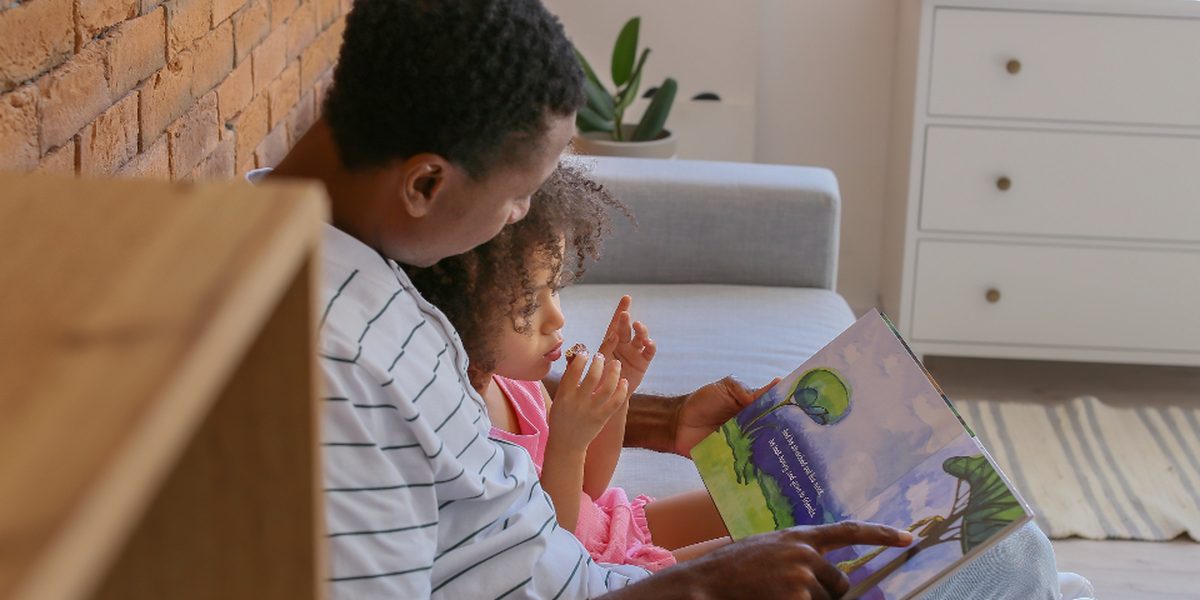
The club is not only the meeting; it is the month of shared story in between. Families with younger kids can make the book a read-aloud — a chapter at bedtime or over breakfast, with the best narrator voices the household can produce. Long car rides become club sessions via audiobook, and a chapter cliffhanger reached at the driveway is legal grounds for sitting in the parked car to finish.
Sibling read-pairs work beautifully too: an older kid reading the club book aloud to a younger member counts as attendance for both, earns the reader formal credit in the minutes, and quietly doubles as one of the better sibling traditions a family can sponsor. However the story gets in — eyes, ears, or a brother doing all the voices — it counts.
Encourage mid-book conversation without mandating it: predictions traded at dinner, outrage shared when a beloved character blunders, a running family theory board on the refrigerator for mysteries. When one kid races ahead and finishes early, deputize them as spoiler marshal — sworn to silence, smug with knowledge — which converts the fastest reader from a problem into an institution.
Add Adventures That Leave the Page
The clubs that last connect books to the world. After finishing a story, do one thing the book did: cook the stew from the mountain chapter, visit a creek because the characters followed one, learn the constellation the heroine steered by, build the paper boat, try the secret code. One outing or project per book, chosen by the member who picked the title, gives every book a finale beyond the last page.
Movie adaptations are the built-in dessert: when the club's book has a film, the meeting after finishing becomes a screening night, followed by the fiercest comparison debate the living room can hold. The book was better is not a conclusion the club assumes — it is a motion that must be argued, with evidence, before the popcorn runs out.
Keep a Club Record Worth Rereading
Give the club a notebook and let it accumulate personality: every book logged with dates, the chooser's name, member ratings on a scale the club invents — stars, slices of pizza, dragons — and one line of review per member, dictated by the youngest and transcribed faithfully. Record the abandoned books too, with cause of death noted, because the notebook's funniest pages will be the executions.
Over a few years the notebook becomes something no reading log ever is: a portrait of the family's taste growing up together, from the year of dinosaur books through the mystery era to the season everyone finally agreed on one fantasy series. Reading old entries aloud makes a perfect meeting opener on anniversary nights, and the volume itself turns into an heirloom bound in snack stains.
Survive the Slumps
Every family book club hits flat stretches — a busy season, a book that sags, a teenager suddenly too cool for the gavel. Shrink rather than quit: switch to short stories or a graphic novel for a month, move the meeting to a doughnut shop, or let the reluctant member choose anything at all, including the joke book, and honor the pick with a straight face. Momentum returns faster from a small silly month than from a three-month pause.
Guard against the other failure mode too: adult over-engineering. If meetings sprout discussion guides and printed agendas, the homework detectors will trip. When in doubt, add snacks and subtract structure.
Final Thoughts
A family book club is really a conspiracy to guarantee two things every month: a shared story and an unhurried hour together arguing happily about it. Start smaller than feels impressive — one short book, one meeting, one batch of themed snacks — and let the constitution, the notebook, and the superlative votes accrete into tradition. The books are the occasion; the club is the point. Years from now, nobody will remember every title, but everyone will remember that this family read together, ate crackers shaped like the plot, and never once wrote a book report.