Somewhere between gardening and storytelling lives the miniature garden — a tiny landscape complete with pocket-sized plants, winding pebble paths, and perhaps a door hinting that someone very small lives there. These little worlds enchant children instantly, but plenty of adults discover that arranging a moss lawn and a miniature bench is among the most relaxing hours a weekend can offer. Miniature gardens fit in a bowl, a broken pot, a terrarium, or a shady corner of a flower bed, making them perfect for any space and any season of life. Here is how to build one that thrives as well as it charms.
Choose a Container That Sets the Scene
Almost anything that holds soil can host a tiny world, and the vessel itself begins the story. Wide, shallow containers — bowl planters, old birdbaths, wooden crates, even a large terracotta saucer — give the best stage for landscaping, since miniature scenes read from above. A broken pot turned on its side becomes an instant hillside cottage scene, with the shards repurposed as terraced steps. Vintage finds like enamel basins, toolboxes, and drawers add character before a single plant goes in.
Drainage remains real gardening law even in imaginary worlds, so drill holes in anything that lacks them or plant in a nursery liner you can lift out. For indoor miniature gardens, a glass terrarium or a deep tray works beautifully and keeps soil off the furniture. Scale matters more than size: a modest container with consistently tiny elements feels magical, while a huge planter with sparse decoration just looks unfinished. Beginners do well starting small — one bowl, one scene.
Location shapes the container choice as much as style does. A porch-step garden wants a frost-tolerant vessel and hardy plants, a patio table centerpiece can be lighter and more delicate, and a windowsill world needs to fit its ledge with room for a drip tray. Placing the finished garden at child height — on a low bench, a tree stump, or the edge of a real flower bed — invites the daily visits that make these projects beloved rather than forgotten.
Pick Plants That Stay Believably Small
The plants are the trees and shrubs of your little world, so choose slow growers that hold their scale. For sunny outdoor gardens, dwarf conifers play the role of stately trees, while thymes, sedums, and hens-and-chicks make convincing shrubbery and groundcover. Irish moss and baby tears create lush lawns, and miniature daisies scaled to the scene bloom like tiny orchards.
- For shade: mosses, small ferns, miniature hostas, and creeping wire vine
- For indoor gardens: baby tears, nerve plant, small peperomias, and polka dot plant
- For desert scenes: small succulents and echeverias arranged as sculptural trees
- For fragrance: creeping thyme paths that release scent when touched
Resist fast growers, however cute at purchase — an enthusiastic vine will swallow a fairy cottage by midsummer. Group plants with matching light and water needs, exactly as in a full-size bed, and your world stays in proportion with only occasional trims.
Build the Landscape Before the Furniture
The difference between a collection of small objects and a miniature garden is landscaping. Start with topography: mound soil into a gentle hill, sink a shallow dish for a future pond, or terrace a slope with flat stones. Then lay the hardscape — a winding path of pea gravel, flat marbles, or sliced stone leads the eye through the scene and makes the space feel inhabited. Fences of twigs, borders of pebbles, and a stone patio under a tiny bench all build the illusion.
Work from big to small: plants first, then structures, then furniture, then the finishing details. Odd numbers and asymmetry read as natural, just as in full-scale garden design. Leave open space, too — a moss lawn with nothing on it makes the busy corners feel intentional. Step back often and squint; if the scene reads as a believable landscape at a glance, the magic is working.
Add the Whimsy: Dwellers, Doors, and Details
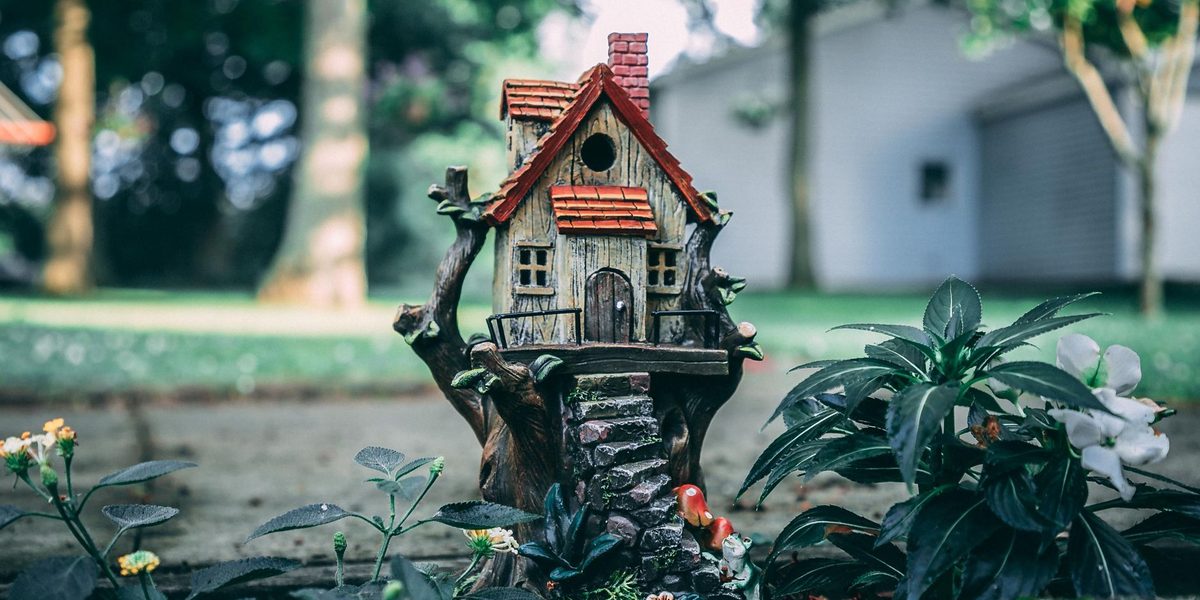
Now the storytelling begins. A tiny door set against a tree trunk, a cottage tucked behind a dwarf conifer, or a ladder leaning against the container rim suggests residents without showing them — and that hint of habitation is the heart of the genre. Furnish with miniature benches, arbors, watering cans, and lanterns from craft stores and dollhouse suppliers, or make your own: twig furniture, acorn-cap bowls, bottle-cap birdbaths, and stone stacks cost nothing and look wonderfully handmade.
Small mirrors become ponds, blue glass pebbles make streams, and a string of micro fairy lights turns the whole scene enchanted after dark. Seasonal styling keeps the world alive all year: tiny pumpkins in autumn, a miniature wreath on the little door in winter, a thumb-sized beach chair in summer. Children adore being the keepers of these updates, and a miniature garden is one of the easiest ways to give a child real ownership of a growing thing.
Try a Theme Beyond the Fairy Tale
Fairy gardens may rule the category, but miniature landscapes take endless forms. A tiny vegetable farm with rows of seedling greens and a matchbox-scale market stand delights practical personalities. A desert scene of sculptural succulents, sand, and a miniature adobe reads sophisticated enough for a modern coffee table. Zen-inspired trays of raked sand, moss islands, and a single tiny lantern bring calm to a desk or windowsill.
Consider a memory garden that recreates a beloved place in miniature — a grandparent's farmhouse, a favorite campsite with a twig-and-canvas tent, a seaside boardwalk. Railway gardeners build entire villages around model tracks, and holiday versions appear each winter as tabletop centerpieces. The theme simply needs internal consistency: matched scale, a cohesive palette, and details that belong to the same story.
Themes also make wonderful shared projects. A grandparent and grandchild recreating the family cottage, siblings each governing a bowl in a shared village, or a classroom building a seasonal scene together — the miniature format invites collaboration because every contribution, however small, visibly changes the world.
Keep the Little World Thriving
Miniature gardens are real gardens, and small volumes of soil dry quickly. Water gently — a small watering can with a fine spout or a spray bottle protects tiny landscaping from washouts — and check containers daily in hot weather. Feed lightly and rarely; lush growth is the enemy of scale, so a quarter-strength feed a few times a season is plenty. Trim plants with scissors as they stretch, treating each cut as topiary in the world's smallest arboretum.
Outdoors, choose whether your world winters in place or comes inside: hardy sedums, thymes, and dwarf conifers shrug off cold, while tender plants and delicate accessories appreciate a garage or windowsill vacation. Refresh moss and mulch each spring, repair the path, and let the scene evolve — a miniature garden that changes slowly over the years becomes its own little history, which is exactly the charm.
Final Thoughts
A miniature garden asks so little — a bowl of soil, a few small plants, an hour of unhurried arranging — and returns a disproportionate amount of delight. It teaches children how gardens work, gives adults a pocket of creative calm, and adds a note of wonder to a porch step or windowsill that guests never fail to notice. Start with one container and one tiny door, and do not be surprised when a second village breaks ground by the end of the season.