The pantry is the engine room of the kitchen, and when it descends into chaos, everything downstream suffers: dinners take longer, groceries get double-bought, and that expensive specialty flour quietly expires behind a wall of cereal boxes. The reverse is also true. An organized pantry makes cooking faster, shopping smarter, and the whole kitchen feel calmer — and getting there is a single satisfying weekend project. Whether you have a walk-in pantry, a single cabinet, or a repurposed hall closet, these ideas will turn your food storage into a system that practically runs itself.
Empty Everything and Face the Truth
Real pantry organization starts with a full reset. Take every single item out — yes, all of it — and group the contents on the counter or table by type: baking, grains and pasta, canned goods, snacks, breakfast, oils and condiments. This is the moment of honesty when you discover the four open bags of the same rice and the spice blend from a house two moves ago. Check dates, toss what is truly done, and set aside unopened items you will never use for the food donation box.
While the shelves are bare, wipe them down and take stock of the space itself. Measure shelf heights and depths before buying a single container, and note the problem zones: the too-deep shelf where things vanish, the awkward corner, the floor space collecting bags. Every pantry has a geography, and the fixes that follow all depend on knowing yours.
Create Zones Like a Tiny Grocery Store
The organizing principle that makes pantries work is zoning — every category gets a consistent home, arranged by how often you reach for it. Everyday essentials live front and center at eye level; heavy items like bulk goods, cases, and small appliances belong low; the rarely used party platters and holiday baking supplies can hold the high shelves. Once zones exist, everyone in the house can find things and, more importantly, put them back.
- A breakfast zone with cereal, oats, and coffee supplies speeds up mornings
- A kid-height snack bin lets children serve themselves from parent-approved options
- A baking zone gathers flour, sugars, and extracts so projects start in seconds
- A dinner-helpers zone of sauces, pastas, and canned staples answers the weeknight scramble
- An open-first bin for items nearing their dates cuts food waste dramatically
Zoning also transforms grocery day: a glance at each zone writes the shopping list, and unloading takes minutes because everything has an address.
Decant Into Clear Containers Where It Counts
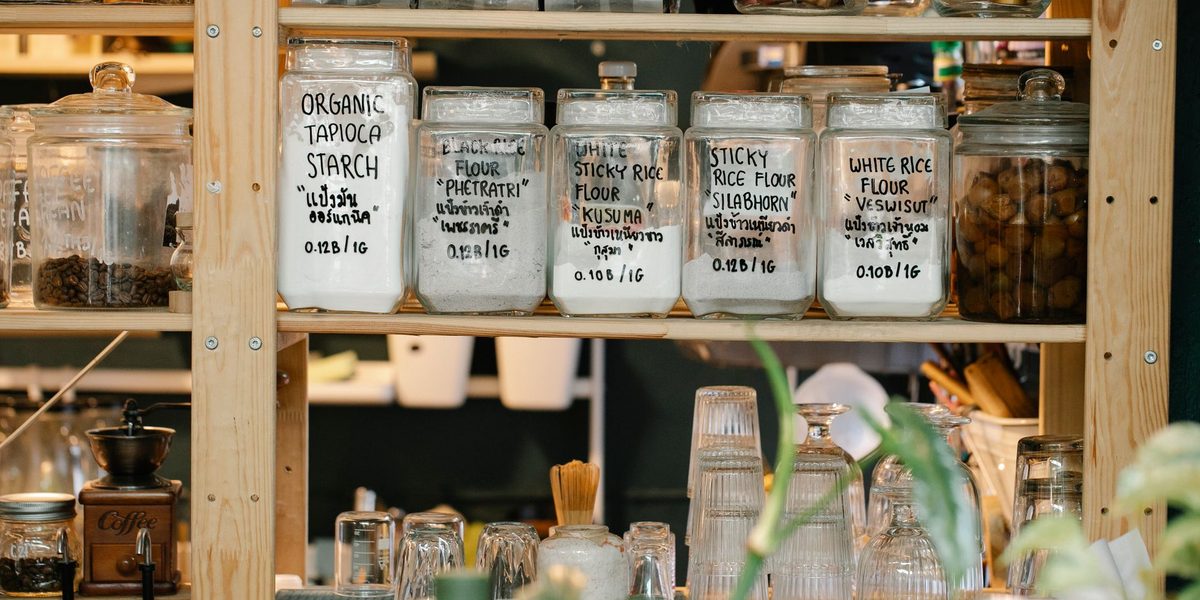
Those photogenic rows of matched jars are not just for looks — clear, airtight containers genuinely work. Decanting flour, sugar, rice, pasta, cereal, and snacks means you can see quantities at a glance, food stays fresher and safe from pantry pests, and awkward half-rolled bags stop avalanching off the shelves. Square and rectangular containers use shelf space far more efficiently than round ones, and consistent shapes stack securely.
Decant selectively, though. Items you burn through quickly, backstock in unopened packages, and anything with critical cooking instructions can stay in original packaging — or slip the instruction panel inside the jar. Cut the cooking directions from pasta and rice boxes and tape them to the container bottom. The goal is a system you will actually maintain on a busy Tuesday, not a photo shoot, so start by decanting only your top staples and expand if the habit sticks.
Label Everything, Including the Shelves
Labels are the difference between an organized pantry and a pantry that stays organized. Label containers with contents, and add the date opened where freshness matters. But the real magic is labeling shelves and bins themselves — when the basket says Snacks and the shelf edge says Baking, every family member becomes capable of correct put-away, and the system survives contact with real life.
Any labeling method works if it is legible and easy to update: a label maker for crisp uniformity, chalk markers on glass for flexibility, or simple printed tags on bin fronts. Choose one style and stick with it for visual calm. When a label has been wrong for a month because the contents changed, change the label — drifting labels are how systems quietly die.
Solve the Deep Shelf, the Corner, and the Door
Every pantry has dead zones, and purpose-built helpers rescue them. Deep shelves swallow food in their dark back half; fix them with clear bins that pull out like drawers, so the back of the shelf is just the back of the bin. Tiered risers let canned goods stand in visible stadium rows, and turntables make corners and deep spots spin their contents to the front — they are unbeatable for oils, vinegars, condiments, and anything sticky.
The back of the pantry door may be the most wasted storage in any kitchen: an over-door rack with adjustable baskets adds several shelves worth of capacity, perfect for spices, wraps and bags, water bottles, or lunch-packing supplies. Floor space benefits from rolling bins for bulk items and pet food, and a wall-mounted rail can hang aprons, market bags, and the step stool that makes the top shelf usable at all.
Make Small Pantries Punch Above Their Weight
No walk-in? The same principles compress beautifully. In a cabinet pantry, shelf risers instantly double each shelf, and vertical dividers turn one tall slot into storage for cutting boards and baking sheets. If shelves are adjustable, move them — most cabinets waste inches of headroom above every shelf that a five-minute adjustment reclaims. Slim rolling carts slide into gaps beside the fridge and hold an entire zone in three tiers.
When the kitchen truly runs out of room, borrow space nearby: a bookshelf with baskets in the hall, a cabinet in the mudroom for backstock and paper goods, or under-bench storage for the bulk purchases. Keep the daily-use items in the kitchen and let overflow live remotely, restocked weekly — the pros call it a butler system, and it works just as well in a small apartment as a big house.
Keep It Running With Tiny Habits
An organized pantry stays organized through small rituals, not willpower. Do a two-minute tidy while dinner simmers: face the labels forward, return the strays, note what is running low. Before each grocery run, glance through the open-first bin and build meals around what needs using. Once a season, spend fifteen minutes checking dates and re-straightening zones — a light touch-up that prevents the need for another full reset.
Involve the household by making the system easier to follow than to ignore: open bins for kids, labels everyone can read, and no complicated stacking that only one person understands. When the put-away is obvious, the pantry maintains itself. Some households post a small running list inside the pantry door — anyone who finishes an item writes it down, and the grocery list writes itself all week long.
Final Thoughts
Pantry organization is not about achieving a magazine photo — it is about a kitchen that works. Empty and edit honestly, zone like a grocery store, decant and label where it genuinely helps, and give the awkward spaces the right tools. The payoff shows up every single day: faster dinners, shorter shopping lists, less wasted food, and the small satisfaction of a door that opens onto order instead of avalanche. One weekend of setup buys you years of smoother meals.