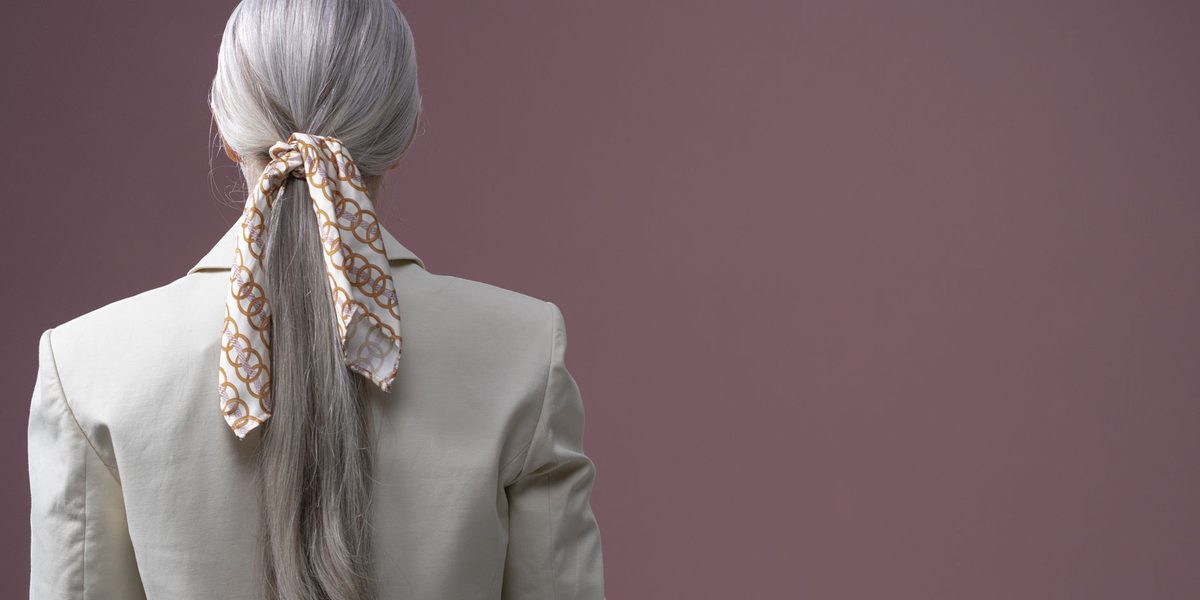
Accessories are the shortest distance between ordinary hair and a considered look. The same second-day ponytail becomes an outfit decision with a silk scarf wrapped through it; three gold pins turn a plain side-sweep into something people compliment in elevators. Best of all, hair accessories are the most forgiving category in beauty — there’s no blending, no drying time, and no mistake a ten-second re-clip can’t fix. Here’s a full collection of ideas for the three great accessory families — scarves, clips, and pins — plus the styling logic that makes them look intentional on any length or texture.
The Scarf: One Square, a Dozen Styles
A silk or satin square is the single most versatile object in hair styling. The foundational moves: folded into a band and tied around the head with the knot at the nape, it’s a classic headband that tames grow-outs and bad hair days alike. Tied with the knot on top, it goes vintage and playful. Wrapped around the base of a ponytail with the ends left trailing, it dresses the plainest style in five seconds — and the trailing-ends version works identically on buns, adding movement and color exactly where a plain elastic sat.
Two more ideas earn permanent rotation. The braided scarf: fold the scarf into a strip and braid it in as a third strand, so color spirals through the braid — sturdier than it looks, and stunning on long hair. And the full wrap: hair twisted up and the scarf wound to cover it completely, knotted at the front or side, protecting hair on wash-delay days while looking entirely deliberate. Satin-adjacent fabrics grip better than pure slippery silk; slightly textured scarves hold knots best of all. Size matters too: a large square folds down to any of these styles, while a long narrow scarf skips straight to ponytail-wrapping and braiding duty. If knots slide on fine hair, anchor the scarf over a thin elastic or a bobby pin first and it will stay put through a full day.
Claw Clips: The Comeback That Never Left
The claw clip is the accessory world’s greatest engineer — it holds a full updo with one motion and zero pins. The essential styles: the classic twist (gather hair as if for a low ponytail, twist upward, clamp the clip vertically along the seam) takes ten honest seconds and suits medium-to-long hair beautifully. The half-claw takes just the crown section, twisted once and clipped, lifting the face while leaving hair down — the best of both.
Play with scale and placement to change the message. A large clip on a loose, low twist reads relaxed and expensive; a small clip snapped over the ends of a braid’s last inch replaces an elastic with something prettier. Short hair joins in with mini claws pinching back face-framing pieces on each side. One technique note for heavy hair: flip your head, gather at the crown, twist tightly, and seat the clip’s teeth fully against the scalp before releasing — a clip that grabs both hair and its own twist holds all day, while a shallow bite slides by lunch.
Pins as Jewelry: Placement Is Everything
Decorative pins — pearl-studded, gold bars, celestial shapes — are hair’s answer to earrings, and they follow jewelry logic: repetition and placement make the look. The core arrangements:
- The stack: two or three pins in a neat row above one ear, holding a swept-back section — the definitive modern pin look.
- The scatter: small matching pins placed irregularly through a loose braid or waves, like ornaments.
- The crossed pair: two bar pins in an X anchoring the front pieces back — one part function, one part statement.
- The seam-liner: pins marching along the seam of a French twist or chignon, turning structure into decoration.
The rule that elevates all of them: pins want company and order. One lonely bobby-style pin looks accidental; two aligned pins look styled; three look like a decision. Match metals to the jewelry you’re wearing and the whole outfit snaps together, the way a stylist would have planned it.
Match the Accessory to the Hair Day
Accessories shine brightest as solutions. Day-two roots disappear under a headband-tied scarf. A grow-out fringe lives happily in crossed pins. Humidity frizz becomes “texture” when a claw clip owns the silhouette. Fine hair gains apparent volume from a slightly-too-big clip on a loose twist, while thick hair finally gets all-day hold from the larger claws and long U-pins that flimsy elastics never delivered.
Think of it as a matching game: identify the day’s hair complaint, then reach for the accessory that reframes it as a style. Even a genuinely bad hair day surrenders to the full scarf wrap — which is why one square of satin in every bag is the closest thing hair styling has to insurance. Texture deserves its own note: curls and coils carry accessories especially well, since volume gives clips and pins something to hold and shows scarves off in motion — satin-lined versions double as protection, making the prettiest option also the kindest one.
Occasion Dressing, From Desk to Dinner
Accessories scale formality faster than restyling ever could. The work-appropriate tier: a matte claw in a neutral shade, a slim fabric headband, or one quiet gold bar pin — polish without announcement. The dinner tier: swap to pearls, a silk scarf on the ponytail, or the seam-liner pin arrangement, and the same underlying hairstyle now belongs at a nicer table. The event tier: pin scatter through waves, a jeweled comb slid into a chignon, or ribbon braided through an updo.
The transformation trick worth remembering: style hair plainly in the morning — low twist, simple braid, loose waves — and carry the evening’s accessory in your bag. The five-o’clock upgrade takes under a minute in any mirror, and it’s far kinder to your hair — and your schedule — than re-curling or re-pinning anything from scratch could ever be. Accessories are the only part of a hairstyle you can change without touching the hairstyle.
Care, Storage, and a Collection That Lasts
A small, loved collection beats a drawer of tangled elastics. Storage ideas that keep things findable and pretty: pins standing in a tiny jar or stuck to a magnetic strip inside a cabinet door; claw clips clamped along the rim of a small basket or a hanging ribbon; scarves rolled in a shallow drawer where every color shows. A dedicated small pouch — two pins, one mini claw, one rolled scarf — lives in the everyday bag as the emergency style kit.
Care is quick: wipe metal pins dry whenever they meet hairspray, hand-wash scarves occasionally in cool water and let them air-dry flat, and retire anything with a snapped tooth or sharp burr before it snags a single strand. When buying, favor smooth finishes and rounded edges — the difference between an accessory hair loves and one it fights. Quality matters most in the claw’s spring and the pin’s coating; everything else is taste.
Final Thoughts
Scarves, clips, and pins are the rare beauty tools that are all reward and no technique: every idea above is executed in seconds and undone even faster. Start with one silk square, one good claw, and a pair of gold pins — the starter kit of nearly every look here — and let the matching game with your hair days teach you the rest. Accessorized hair isn’t about having done more; it’s about looking like you meant it, which, from now on, you did.