Every home has a corner that could be doing something wonderful and instead holds a plant stand nobody waters or a chair nobody sits in. That corner wants to be a reading nook. A dedicated spot for curling up with a book — comfortable, well-lit, slightly tucked away — is one of the most life-improving small projects in all of decorating, and it requires no renovation, no big budget, and surprisingly little space. Whether you have a bay window, a closet you can empty, or just four spare feet in the bedroom, these ideas will help you build a nook you will actually use every day.
Find the Corner That Wants to Be a Nook
The best reading nooks share three ingredients: natural light, a sense of enclosure, and distance from household traffic. Walk your home looking for underused pockets that offer at least two of the three. Classic candidates include the corner of a bedroom, a wide landing at the top of the stairs, the dead space beside a fireplace, an alcove under a sloped ceiling, or the end of a hallway with a window.
Enclosure is what separates a nook from a chair that happens to hold books. You can create it even in an open room: turn a tall bookcase perpendicular to the wall to form a partial wall, hang a curtain across an alcove opening, or let a large plant and a floor lamp bracket the space. Position the seat so your back is protected — facing into the room rather than away from the door — and the spot will instantly feel like a refuge rather than a perch.
Choose Seating You Can Sink Into for Hours
The chair makes or breaks the nook, and the test is simple: could you sit in it, feet up, for two hours? Generously scaled armchairs with padded arms at the right height for holding a book are the classic answer. A small loveseat suits readers who share with a child or a cat, while a chaise or daybed invites full horizontal commitment. If the budget is thrift-level, an older chair with good bones plus a new throw and a supportive cushion outperforms many new pieces.
Whatever seat you choose, add a footrest — an ottoman, a pouf, or a padded storage bench — because elevated feet are half of what makes reading feel luxurious. A small side table or a slim C-table that slides over the chair arm holds the tea, the glasses, and the next book in the stack. In tight quarters, a wall-mounted shelf beside the chair does the same job with zero footprint.
Layer Light for Day and Night
Reading is an activity built on light, and a good nook layers it. By day, position the seat beside a window rather than facing it, so daylight lands on the page without glare in your eyes. By night, the essential piece is a dedicated task light: a floor lamp arching over the chair's shoulder, a swing-arm sconce mounted beside the seat, or a table lamp at reading height. Aim for warm bulbs bright enough that the page is crisp but the mood stays soft.
Then add glow. A dimmable secondary light, a string of warm fairy lights along a shelf, or a small lamp across the room keeps the nook from floating in darkness and gives the space its after-dark magic. If the nook lives where wiring is awkward, rechargeable cordless lamps and battery sconces have made electricity optional — stick them where you need them and charge them monthly.
Consider the light's temperature as carefully as its brightness. Cool bluish bulbs read clinical and keep the mind alert, while warm amber tones cue the body toward rest — exactly the register a reading corner wants in the evening. If one lamp must do everything, choose a dimmable model with adjustable warmth, bright and neutral for afternoon chapters, low and golden for the last pages before sleep.
Pile On the Comfort Layers
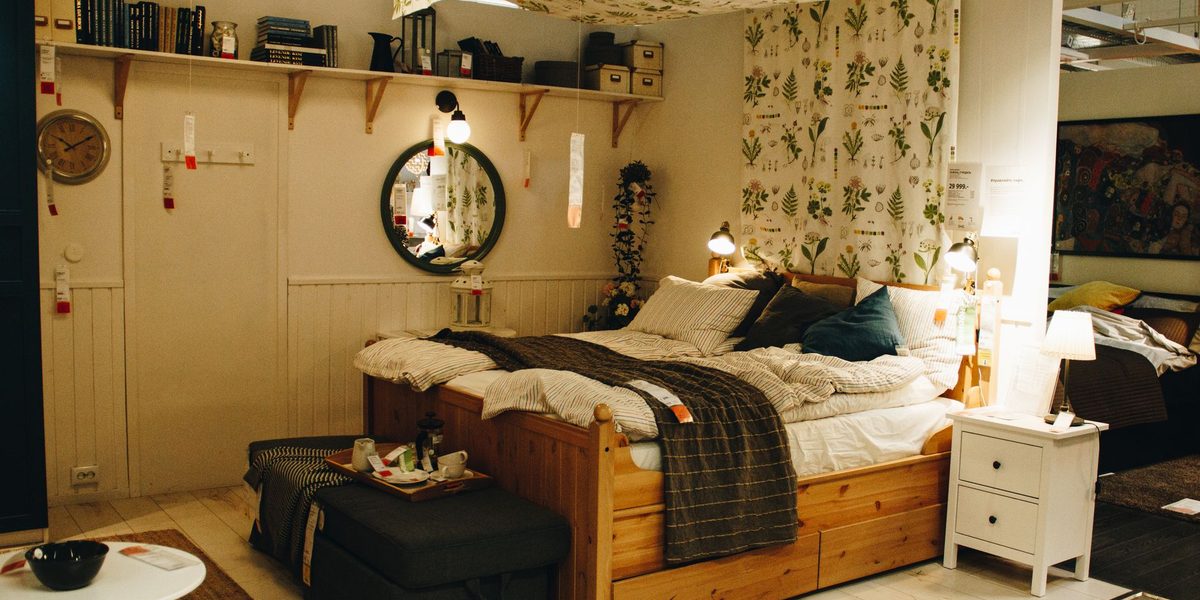
Coziness is textural, and a nook earns the word through layers you can feel. Start from the floor up with a soft rug that defines the nook's boundary and warms bare feet. Dress the seat with cushions in a couple of textures — a firm lumbar pillow for support, a squashy one for burrowing — and keep at least one genuinely good blanket within reach at all times, whether chunky knit for winter or waffle-weave cotton for summer.
- A sheepskin or faux fur draped over the chair back adds instant softness
- A basket beside the seat corrals extra throws and the current book stack
- A warm-toned curtain, even on a plain window, muffles sound and frames the nook
- A hot water bottle or heatable pad turns winter reading into an event
Comfort extends past touch: a candle or diffuser with a signature scent trains your brain to relax the moment you sit down, and a small speaker for rain sounds or quiet music seals the cocoon.
Keep Books Close and Beautiful
A reading nook needs books within arm's reach — not the whole library, just the living collection. A single wall-mounted shelf above or beside the seat holds the current rotation, a picture ledge displays covers face-out like a tiny bookshop, and a low bookcase can double as the nook's boundary wall and side table at once. Floor stacks, corralled on a tray or bound with a leather strap, are legitimate decor in a reader's corner.
Give the collection a little curation. Keep the to-be-read pile visible and tempting, rotate seasonal favorites forward, and let a few beloved covers face outward as art. A tiny drawer or box for bookmarks, sticky flags, and a pen makes the nook self-sufficient, and a reading journal on the shelf turns finished books into a running record of the year.
Build Nooks for Kids and Shared Spaces
Children take to reading nooks with a devotion adults can only envy, and kid-scale nooks are gloriously cheap to make. A play tent or canopy in a corner, stuffed with floor cushions and a basket of picture books, is a complete nook. So is an emptied lower closet with its door removed, string lights, and a beanbag — the famous closet-nook conversion that children treat like a private clubhouse. Front-facing book displays matter at this age; covers, not spines, pull kids in.
In shared and small homes, nooks can time-share space. A window seat with storage under the lid serves as reading spot, guest seating, and toy chest. A bedroom corner nook doubles as the morning-coffee chair. Even a wide windowsill topped with a cushion becomes a nook for one, and an outdoor version — a porch corner with a weatherproof chair, a lantern, and a blanket basket — extends the reading season into every mild evening.
Final Thoughts
A reading nook is a small act of generosity toward yourself: one corner of the home formally reserved for slowness. Find the spot with light and shelter, invest in a seat that welcomes long stays, layer the lighting and the soft things, and keep the books close. None of it needs to happen in one weekend — nooks improve by accretion, one cushion and lamp at a time. What matters is starting, because once the corner exists, the books, the tea, and the lost afternoons follow all on their own.