Few small projects pay off as generously as a windowsill herb garden. For the cost of a few pots and some seedlings, you get fresh flavor within arm's reach of the stove, a row of living green that makes the kitchen feel alive, and the quiet daily pleasure of tending something that grows. You do not need a garden, a greenhouse, or even much of a green thumb — just a reasonably bright window and a little know-how. Here are the ideas and practical tips that turn any sill into a tiny, hardworking farm.
Find the Right Window First
Light is the single biggest factor in windowsill success, so choose your location before you choose your herbs. Most culinary herbs are sun lovers that want six or more hours of direct light, which usually means a south-facing window in most homes north of the equator. East- and west-facing sills deliver a decent half-day of sun and suit the more shade-tolerant herbs, while a north-facing window alone will frustrate almost everything except the toughest leafy growers.
Watch your candidate window for a day and note when direct sun actually lands on the sill, since roof overhangs, trees, and neighboring buildings all steal light. If the best you can offer is a few dim hours, do not give up — a small full-spectrum grow light clipped above the pots makes any windowsill viable, even in a basement apartment or during short, gray winter days. Also consider temperature: sills directly above radiators or drafty single-pane windows in deep winter can stress plants, so an inch or two of buffer from the glass helps.
Choose Herbs That Earn Their Sill Space
Start with herbs you genuinely cook with, then weight your choices toward the ones that thrive indoors. The reliable performers for bright sills are basil, chives, parsley, thyme, oregano, and mint, with rosemary and sage joining happily where light is strong. Cilantro and dill grow quickly from seed but bolt fast, so they suit gardeners who enjoy replanting every several weeks.
- Basil loves warmth and sun and rewards frequent picking with bushier growth
- Chives tolerate less light than most and regrow tirelessly after each trim
- Mint is nearly unkillable but must live in its own pot or it will conquer its neighbors
- Thyme and oregano prefer to dry out between waterings, perfect for forgetful growers
- Parsley grows slowly but steadily and shrugs off cooler sills
Three to five pots is the sweet spot for a first garden — enough variety to matter in the kitchen, few enough to care for in a couple of minutes a day.
Seedlings from the garden center give the fastest start and are worth it for slow growers like rosemary and thyme. Seeds cost less and offer far more variety — a single packet of basil can supply a whole summer of successive pots. Supermarket herb plants can join the sill too if you treat them right: they are usually many seedlings crammed in one pot, so divide the clump into two or three smaller plantings, give each room to breathe, and they often outlive their expected week by months.
Pick Pots and Soil That Set You Up to Win
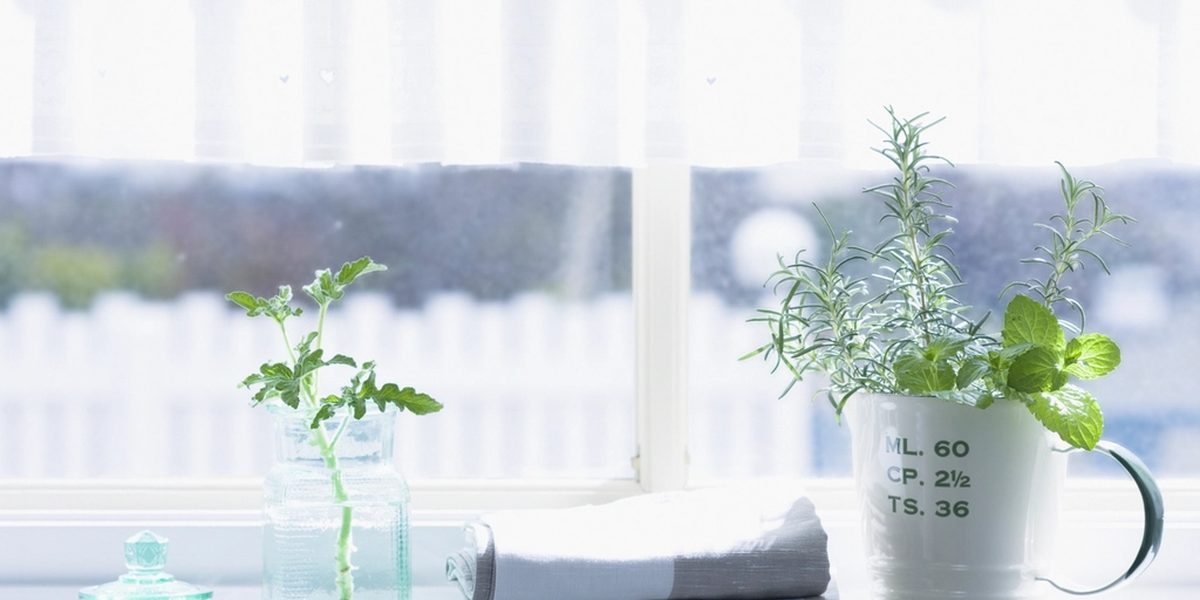
Every pot needs a drainage hole and a saucer; that single rule prevents most windowsill heartbreak. Beyond it, four to six inch pots suit most herbs, with rosemary and mint appreciating something roomier. Terracotta breathes and helps prevent overwatering, though it dries faster; glazed ceramic holds moisture longer and brings color to the sill. A matched row of pots looks tailored, while an eclectic mix of vintage tins and hand-thrown mugs (drilled for drainage) reads charming and personal.
Fill pots with a quality indoor potting mix, never garden soil, which compacts and suffocates roots in containers. Mixing in a handful of perlite improves drainage for Mediterranean herbs like thyme, rosemary, and oregano that hate wet feet. Leave an inch of space below the rim so watering does not overflow, and set the whole lineup on a waterproof tray to spare your windowsill from drips and rings.
Water and Feed Like a Pro
More windowsill herbs die from kindness than neglect, and the kindness is almost always water. Rather than watering on a schedule, check the soil: poke a finger an inch deep, and water only when it feels dry at that depth. Then water thoroughly until it runs from the drainage hole, empty the saucer after a few minutes, and let the plant work through that drink before the next. Basil, parsley, and mint like steadier moisture; thyme, oregano, rosemary, and sage prefer a proper dry-down between waterings.
Indoor herbs live in a small volume of soil, so nutrients run out over time. A half-strength liquid fertilizer every three to four weeks during active growth keeps leaves lush without forcing the weak, floppy growth that overfeeding causes. Rotate each pot a quarter turn every few days so the plants grow straight instead of leaning into the glass, and give leaves an occasional rinse or wipe to keep dust from dimming their light.
Harvest So Your Herbs Keep Giving
Harvesting is not just the reward — it is part of the care. Regular trimming tells the plant to branch and thicken, so snip early and often, even if a recipe does not demand it. The golden rule is to take no more than a third of the plant at once, cutting stems just above a pair of leaves, which is exactly where new branches will emerge. On basil, pinch the tips routinely and remove flower buds the moment they appear, because flowering turns the leaves bitter and slows production.
For chives and parsley, cut outer stems at the base and let the center keep producing. Woody herbs like thyme and rosemary prefer light, frequent trims to hard cutbacks. When harvests outpace dinner plans, chop surplus herbs, pack them into ice cube trays with a little olive oil, and freeze — instant flavor starters for future soups and sautés.
Style the Sill So It Looks as Good as It Tastes
A herb garden is decor as much as pantry, so give it a little styling attention. Repeating one pot material in varied heights creates rhythm, while small labels — stamped stakes, chalkboard tags, or hand-written copper markers — add charm and settle any parsley-versus-cilantro debates. A riser or small shelf at one end of the sill breaks up the straight line and buys space for an extra pot.
If the sill itself is narrow, widen your thinking: a tension rod across the window frame holds lightweight hanging pots, a wall-mounted rail with hooks carries small buckets of herbs beside the glass, and a slim tiered stand just below the window multiplies capacity threefold. The kitchen windowsill is the classic home, but a bright bedroom or living room window grows herbs just as well and smells wonderful doing it.
Final Thoughts
A windowsill herb garden is gardening at its most forgiving: small stakes, fast feedback, and delicious rewards. Start with a bright window, three or four herbs you already love to cook with, honest drainage, and a finger-test watering habit, and you will be snipping fresh flavor within weeks. From there it only grows — another pot, a grow light for winter, seeds instead of seedlings — until fresh herbs are simply part of how your kitchen works, every season of the year.